



Calcium Channel
Ca2+ channels; Ca channels
Calcium channel is an ion channel which displays selective permeability to calcium ions. It is sometimes synonymous as voltage-dependent calcium channel, although there are also ligand-gated calcium channels. Voltage-gated calcium (CaV) channels catalyse rapid, highly selective influx of Ca2+ into cells despite a 70-fold higher extracellular concentration of Na+. Some calcium channel blockers have the added benefit of slowing your heart rate, which can further reduce blood pressure, relieve chest pain (angina) and control an irregular heartbeat.
Calcium Channel Isoform Specific Products
All Product Categories
-
Calcium Channel Inhibitors
(593)
View all products
-
Calcium Channel Agonists
(35)
View all products
-
Calcium Channel Antagonists
(209)
View all products
-
Calcium Channel Activators
(88)
View all products
-
Calcium Channel Modulators
(45)
View all products
-
Calcium Channel Chemical
(1)
View all products
-
Calcium Channel Inducers
(12)
View all products
-
Calcium Channel Controls
(10)
View all products
-
Calcium Channel Ligands
(7)
View all products
-
Calcium Channel Related Products (1237)
Related Products (1237)

-
Antibodies (29)
-
Related Compound Screening Libraries (1)
-
Calcium Channel Isoform Comparison
-
Fasudil dihydrochloride
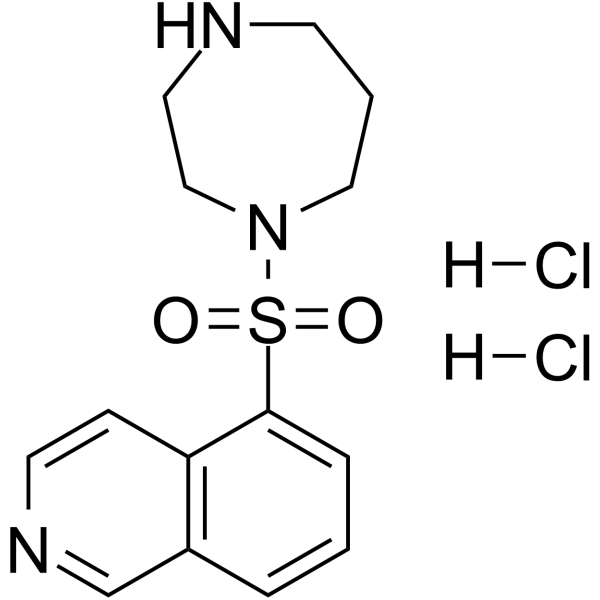 0 ImagesSynonyms: HA-1077 dihydrochloride; AT-877 dihydrochlorideFasudil (HA-1077; AT877) dihydrochloride is a nonspecific RhoA/ROCK inhibitor and also has inhibitory effect on protein kinases, with an Ki of 0.33 μM for ROCK1, IC50s of 0.158 μM and 4.58 μM, 12.30 μM, 1.650 μM for ROCK2 and PKA, PKC, PKG, respectively. Fasudil dihydrochloride is also a potent Ca2+ channel antagonist and vasodilator.
-
8-Br-7-CH-cADPR disodium
 0 ImagesCat. No.: HY-134269ASynonyms: 7-deaza-8-bromo-cADPR disodium; 7-deaza-8-bromo-cyclic ADP ribose disodium8-Br-7-CH-cADPR disodium (7-Deaza-8-bromo-cADPR) is a potent cADPR antagonist. 8-Br-7-CH-cADPR disodium shows partial inhibition of calcium elevation caused by sTIR dimerization. 8-Br-7-CH-cADPR disodium significantly decreases Paclitaxel (HY-B0015)-induced axon degeneration.
-
Amlodipine (besylate) (Standard)
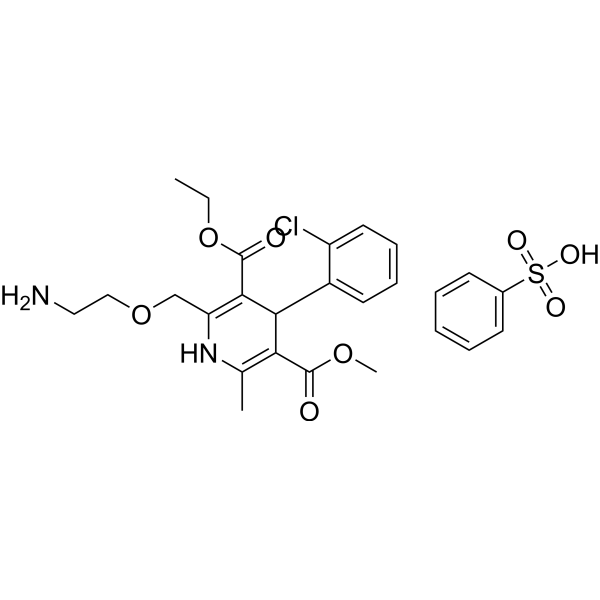 0 ImagesSynonyms: Amlodipine benzenesulfonate (Standard)Amlodipine (besylate) (Standard) is the analytical standard of Amlodipine (besylate). This product is intended for research and analytical applications. Amlodipine besylate (Amlodipine benzenesulfonate), an antianginal agent and an orally active dihydropyridine calcium channel blocker, works by blocking the voltage-dependent L-type calcium channels, thereby inhibiting the initial influx of calcium. Amlodipine besylate can be used for the research of high blood pressure and cancer.
-
Terodiline hydrochloride
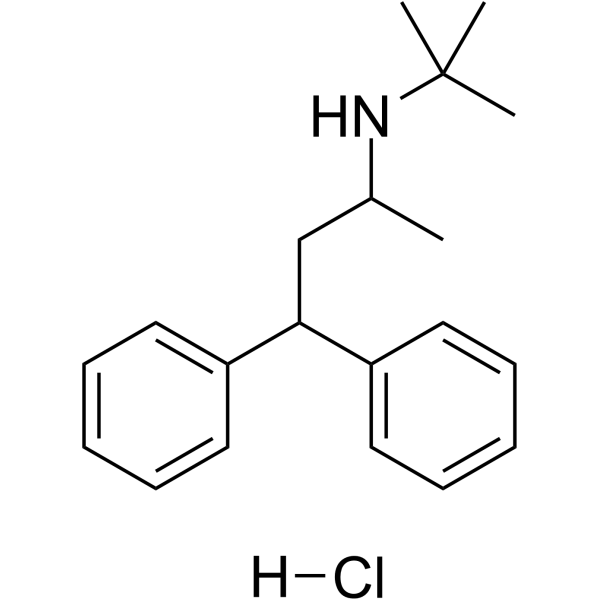 0 ImagesTerodiline hydrochloride is an M1-selective muscarinic receptor (mAChR) antagonist with Kbs of 15, 160, 280, and 198 nM in rabbit vas deferens (M1), atria (M2), bladder (M3) and ileal muscle (M3), respectively. Terodiline hydrochloride also is a Ca2+ blocker. Terodiline hydrochloride acts as a treatment for urinary frequency and urge incontinence.
-
Gallopamil
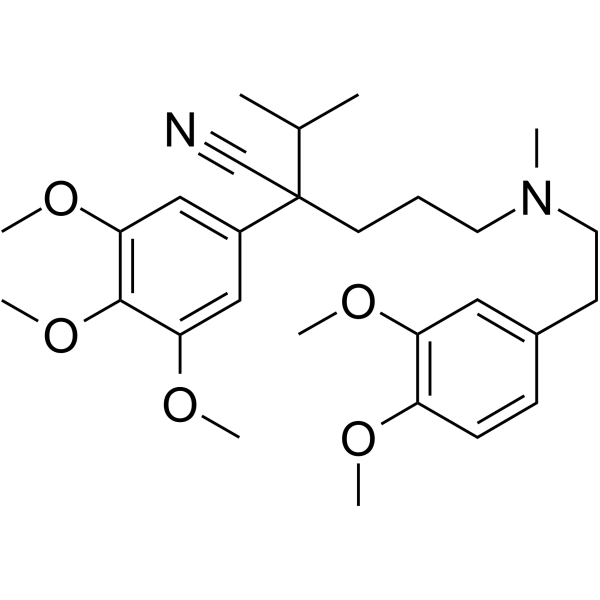 0 ImagesCat. No.: HY-14276CAS No.: 16662-47-8Synonyms: MethoxyverapamilGallopamil (Methoxyverapamil), a methoxy derivative of Verapamil, is a phenylalkylamine calcium antagonist. Gallopamil inhibits acid secretion in a concentration-dependent manner with an IC50 of 10.9 μM. Gallopamil is a potent antiarrhythmic and vasodilator agent.
-
Barnidipine
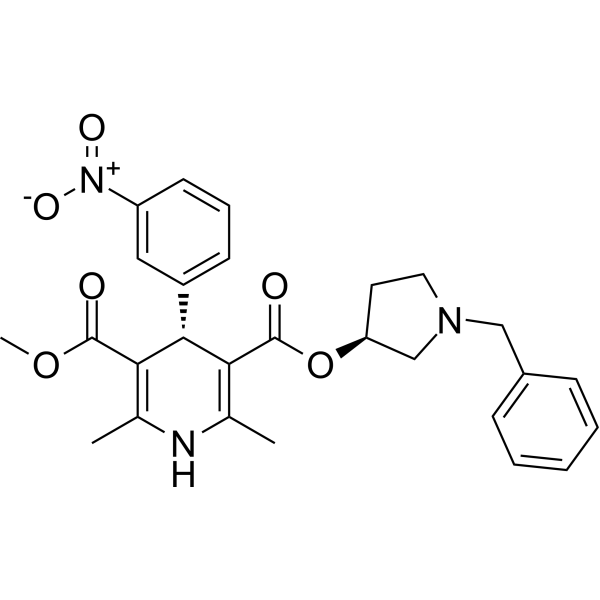 0 ImagesCat. No.: HY-107322ACAS No.: 104713-75-9Synonyms: Mepirodipine; YM-09730-5 Free baseBarnidipine (Mepirodipine) is an L-type calcium antagonist (CaA) with high affinity for [3H] initrendipine binding sites (Ki = 0.21 nmol/L), has selective action against CaA receptors. Barnidipine is an orally effective antihypertensive agent that can reduce the level of platelet-derived growth factor B-chain mRNA and peripheral vascular resistance.
-
TTA-Q6
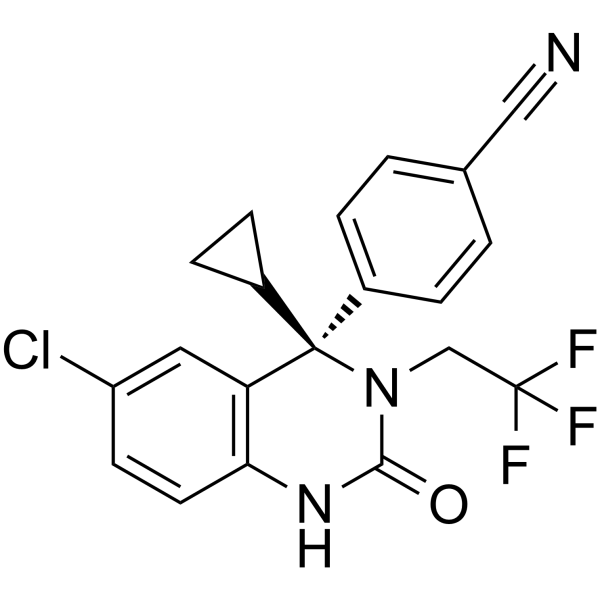 0 ImagesTTA-Q6 is a selective T-type Ca2+ channel antagonist, which can be used in the research of neurological disease.
-
Barnidipine-d5 hydrochloride
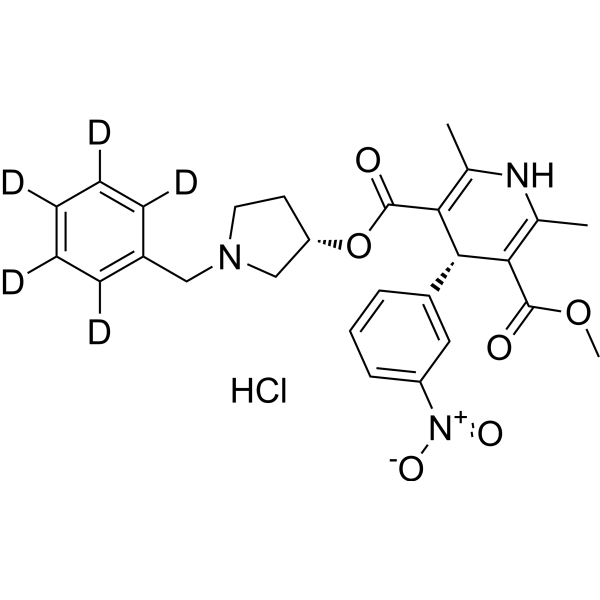 0 ImagesSynonyms: Mepirodipine-d5 hydrochloride; YM-09730-5-d5 hydrochlorideBarnidipine-d5 (hydrochloride) is the deuterium labeled Barnidipine hydrochloride. Barnidipine hydrochloride (Mepirodipine hydrochloride) is an L-type calcium antagonist (CaA) with high affinity for [3H] initrendipine binding sites (Ki=0.21 nmol/l), has selective action against CaA receptors.Barnidipine hydrochloride (Mepirodipine hydrochloride) is an antihypertensive agent and acts by the reduction of peripheral vascular resistance secondary to its vasodilatory action.
-
Tilmicosin (Standard)
 0 ImagesSynonyms: LY-177370 (Standard); EL-870 (Standard)Tilmicosin (Standard) is the analytical standard of Tilmicosin. This product is intended for research and analytical applications. Tilmicosin (LY-177370) is an orally active calcium channel antagonist and macrolide antibiotic with antimicrobial activity. Tilmicosin mainly acts on the 50S subunit of bacterial ribosomes, inhibiting protein synthesis. Tilmicosin is effective in the treatment of respiratory diseases in livestock such as cattle, sheep and pigs. In addition, Tilmicosin has immunomodulatory and anti-inflammatory effects.
-
Devapamil
 0 ImagesSynonyms: D 888; DesmethoxyverapamilDevapamil (D 888; Desmethoxyverapamil) is an antagonist for calcium channel.
-
Fasudil Hydrochloride (Standard)
 0 ImagesSynonyms: HA-1077 Hydrochloride (Standard); AT-877 Hydrochloride (Standard)Fasudil (Hydrochloride) (Standard) is the analytical standard of Fasudil (Hydrochloride). This product is intended for research and analytical applications. Fasudil (HA-1077; AT877) Hydrochloride is a nonspecific RhoA/ROCK inhibitor and also has inhibitory effect on protein kinases, with an Ki of 0.33 μM for ROCK1, IC50s of 0.158 μM and 4.58 μM, 12.30 μM, 1.650 μM for ROCK2 and PKA, PKC, PKG, respectively. Fasudil Hydrochloride is also a potent Ca2+ channel antagonist and vasodilator.
-
Flavoxate hydrochloride (Standard)
 0 ImagesSynonyms: Rec-7-0040 (Standard); DW61 (Standard)Flavoxate (hydrochloride) (Standard) is the analytical standard of Flavoxate (hydrochloride). This product is intended for research and analytical applications. Flavoxate hydrochloride (Rec-7-0040; DW61) is an orally active L-type Ca2+ channel inhibitor and antispasmodic. Flavoxate hydrochloride inhibits cyclic adenosine monophosphate production by blocking voltage-dependent inward Ba2+ currents, regulating the brainstem micturition center, and stimulating G protein-coupled receptors. Consequently, Flavoxate hydrochloride induces relaxation of bladder smooth muscle and inhibits isovolumetric rhythmic contractions. Flavoxate hydrochloride effectively increases bladder capacity and alleviates symptoms of urgent urination frequency and pollakiuria caused by overactive bladder. Flavoxate hydrochloride can be used in research on overactive bladder and related voiding dysfunctions.
-
Amlodipine-d4 maleate
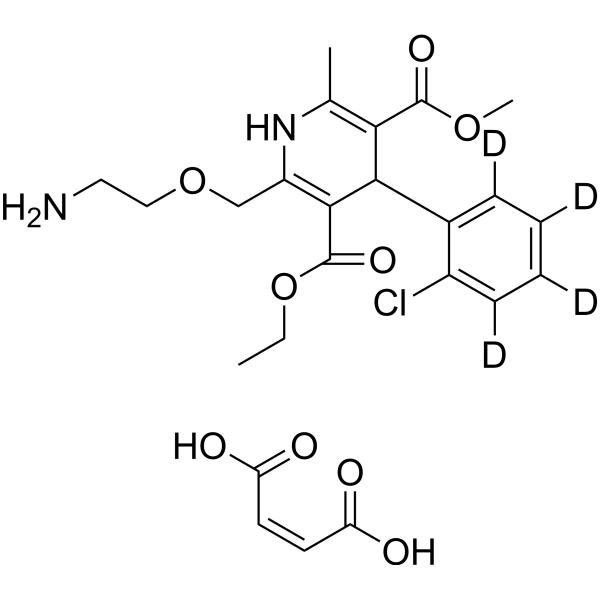 0 ImagesCat. No.: HY-B0317ASCAS No.: 2714486-25-4Amlodipine-d4 (maleate) is the deuterium labeled Amlodipine maleate. Amlodipine maleate is a dihydropyridine calcium channel blocker, acts as an orally active antianginal agent. Amlodipine maleate blocks the voltage-dependent L-type calcium channels, thereby inhibiting the initial influx of calcium. Amlodipine maleate can be used for the research of high blood pressure and cancer.
-
L-Phenylalanine-d7
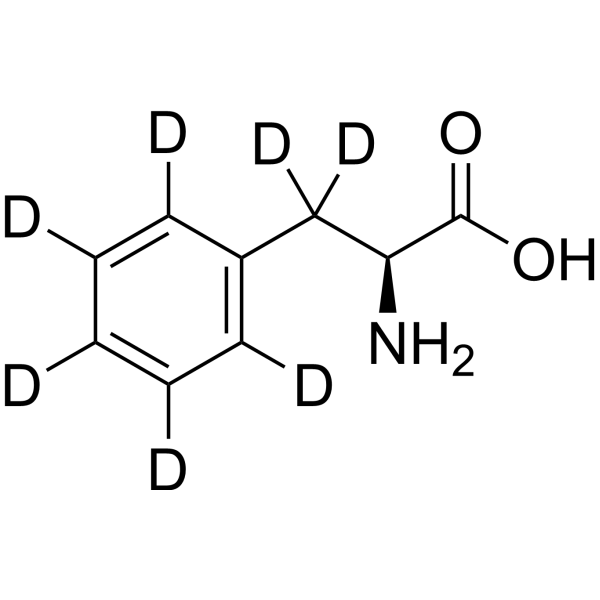 0 ImagesSynonyms: (S)-2-Amino-3-phenylpropionic acid-d7L-Phenylalanine-d7 is the deuterium labeled L-Phenylalanine. L-Phenylalanine ((S)-2-Amino-3-phenylpropionic acid) is an essential amino acid isolated from Escherichia coli. L-Phenylalanine is a α2δ subunit of voltage-dependent Ca+ channels antagonist with a Ki of 980 nM. L-phenylalanine is a competitive antagonist for the glycine- and glutamate-binding sites of N-methyl-D-aspartate receptors (NMDARs) (KB of 573 μM ) and non-NMDARs, respectively. L-Phenylalanine is widely used in the production of food flavors and pharmaceuticals.
-
YS-201
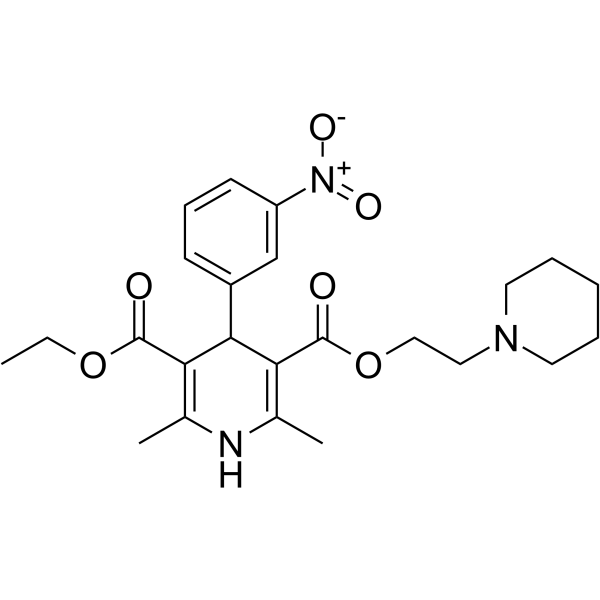 0 ImagesYS-201 is a dihydropyridine-type calcium channel antagonist. YS-201 has the potential for angina pectoris and hypertension treatment.
-
Calcium Channel antagonist 2
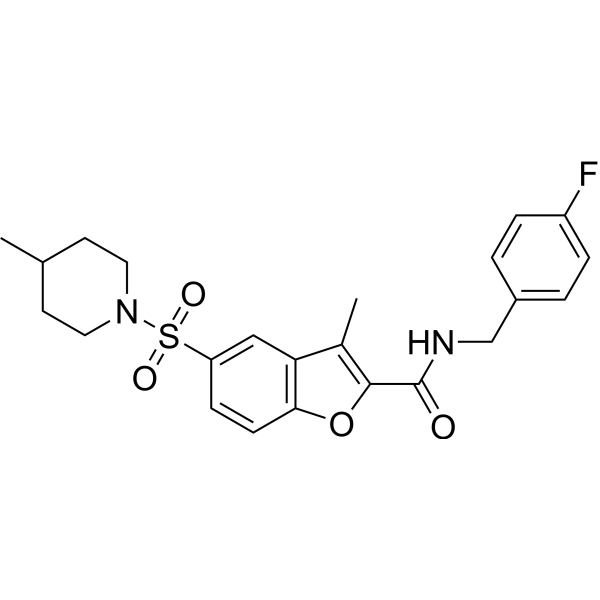 0 ImagesCalcium Channel antagonist 2 (Compound 154) is a calcium channel antagonist (IC50=5-20 μM). Calcium Channel antagonist 2 can be used in study of calcium channel-mediated diseases such as pain and diabetes.
-
Fasudil mesylate
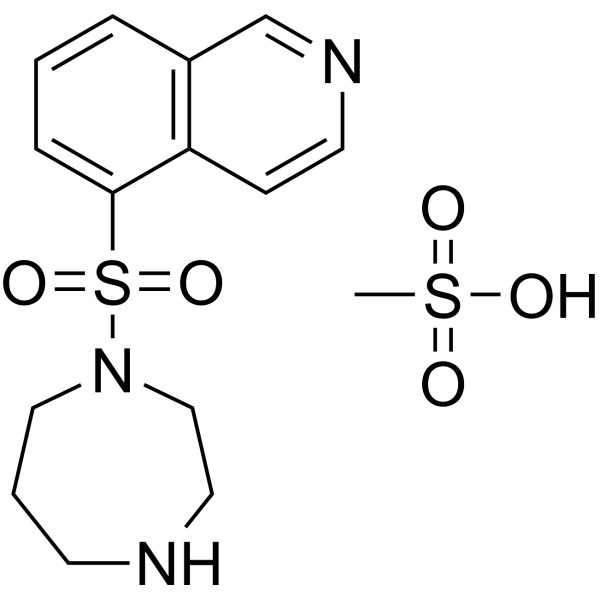 0 ImagesCat. No.: HY-10341DCAS No.: 1001206-62-7Synonyms: HA-1077 mesylate; AT-877 mesylateFasudil (HA-1077; AT877) mesylate is a nonspecific and orally active RhoA/ROCK inhibitor and also has inhibitory effect on protein kinases, with an Ki of 0.33 μM for ROCK1, IC50s of 0.158 μM and 4.58 μM, 12.30 μM, 1.650 μM for ROCK2 and PKA, PKC, PKG, respectively. Fasudil mesylate is also a potent Ca2+ channel antagonist and vasodilator.
-
Ziconotide
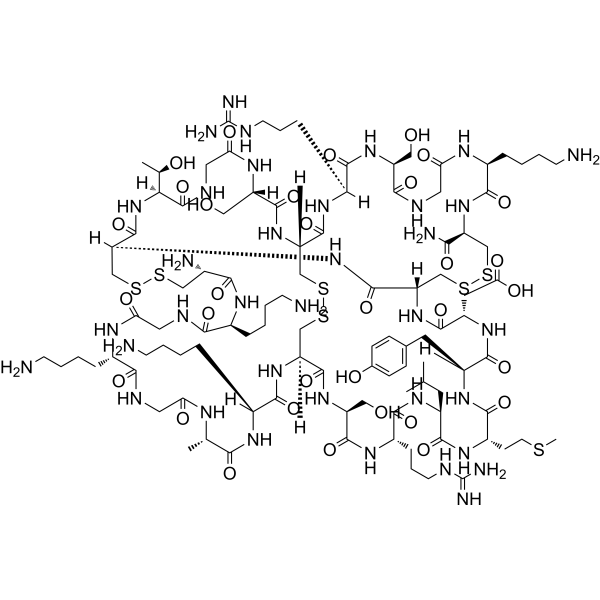 0 ImagesCat. No.: HY-P0062CAS No.: 107452-89-1Synonyms: SNX-111Ziconotide (SNX-111), a peptide, is a potent and selective block of N-type calcium channels antagonist. Ziconotide reduces synaptic transmission, and can be used for chronic pain research.
-
Ziconotide TFA
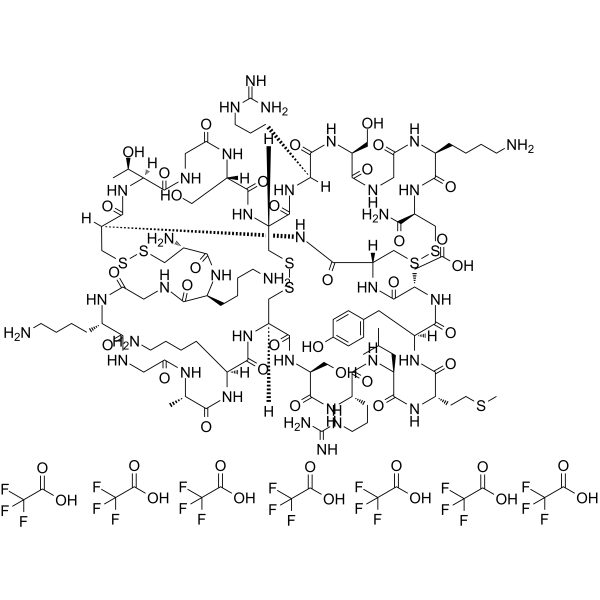 0 ImagesCat. No.: HY-P0062ASynonyms: SNX-111 TFAZiconotide TFA (SNX-111 TFA), a peptide, is a potent and selective block of N-type calcium channels antagonist. Ziconotide TFA reduces synaptic transmission, and can be used for chronic pain research.
-
Amlodipine-d4 besylate
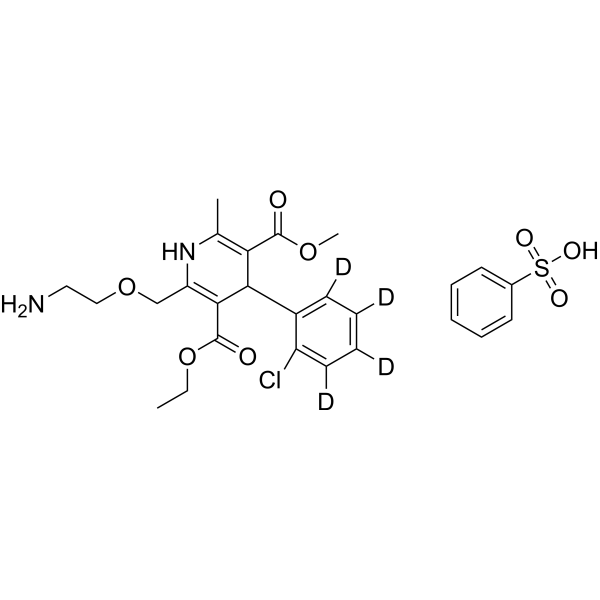 0 ImagesCat. No.: HY-B0317BSSynonyms: Amlodipine benzenesulfonate-d4 besylateAmlodipine-d4 (besylate) is the deuterium labeled Amlodipine besylate. Amlodipine besylate (Amlodipine benzenesulfonate), an antianginal agent and an orally active dihydropyridine calcium channel blocker, works by blocking the voltage-dependent L-type calcium channels, thereby inhibiting the initial influx of calcium. Amlodipine besylate can be used for the research of high blood pressure and cancer.




